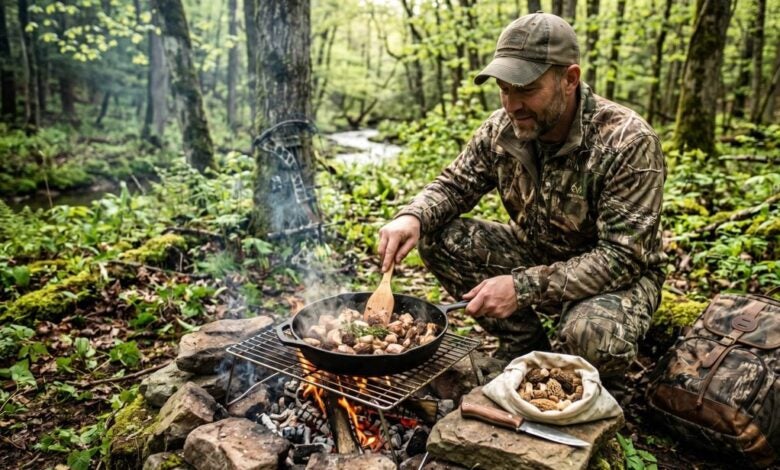
May has officially arrived, bringing with it the most anticipated time of the year for the conscious outdoorsman: the spring harvest. As the woods wake up from their winter slumber, the damp earth and warming temperatures trigger the elusive morel mushroom to finally make its appearance. But the spring woods offer a second, equally thrilling prize.
The morel flush perfectly coincides with spring turkey season, presenting a rare opportunity to harvest two of nature’s greatest culinary treasures on the exact same day. The field-to-table lifestyle is about more than just securing a meal; it is a deep, primal connection to your food, emphasizing a respect for the land and the heritage of the hunt. There is a profound satisfaction in tracking down your own ingredients, processing them with care, and bringing them together in a single, mouth-watering dish.
Whether you are a seasoned hunter or a curious foodie looking to explore the wild side of the culinary arts, this guide is your ticket to the ultimate springtime field-to-table meal. Here is everything you need to know about tracking down the forest’s finest fungi, pairing them with a fresh, wild bird, and finding inspiration from the experts.
Part 1: The Thrill of the Hunt – How to Find Morel Mushrooms
Morel mushrooms are the undisputed kings of the spring forest. With their honeycomb-like caps and rich, earthy, nutty flavor, they are highly sought after by chefs and foragers across the globe. Because they resist commercial cultivation, the only way to get your hands on fresh morels is to hit the woods.
If you are wondering how to find morel mushrooms, the secret lies in understanding the perfect combination of timing, temperature, and trees.
- Timing and Temperature: Morels typically begin to pop when daytime temperatures consistently reach the 60s and nighttime temperatures hover around the 50s. They love humidity, so the best time to hunt is a day or two after a warm spring rain.
- Find the Right Trees: Morels have a symbiotic relationship with certain tree species. If you want to find the mushrooms, find the trees. Look for dead or dying Elm trees where the bark is just starting to peel, Ash and Sycamore trees near creek beds, and old, decaying apple orchards.
- Train Your Eyes: Morels blend perfectly into the leaf litter. Instead of looking straight down, crouch low and look 10 to 20 feet ahead of you. Once you spot one, stop moving! Where there is one, there are almost always more nearby.
Safety Note: Always slice your morels in half from top to bottom before cooking. A true morel is completely hollow inside. If it is not hollow, it is a “false morel” and should not be eaten.
Part 2: The Harvest – A Match Made in the Woods
Once your foraging bag is full and your turkey tag is punched, the true field-to-table magic begins in the kitchen. Cooking wild game can intimidate some, but the core philosophy is simple: respect the meat.
Unlike store-bought poultry, wild turkey is incredibly lean. The biggest mistake people make with wild turkey breast recipes is overcooking the meat, which quickly dries it out. To honor our spring harvest, we are going to combine our freshly foraged morels with tender wild turkey in a rich, rustic pan sauce.
Recipe: Pan-Seared Wild Turkey Breast with Creamy Morel Sauce
Ingredients:
- 1 wild turkey breast (boneless and skinless)
- 1 cup fresh morel mushrooms, halved and thoroughly cleaned
- 4 tbsp unsalted butter (divided)
- 2 tbsp olive oil
- 1 medium shallot, finely minced
- 2 cloves garlic, minced
- ½ cup dry white wine (like Sauvignon Blanc)
- ¾ cup heavy cream
- 1 tsp fresh thyme, chopped
- Salt and freshly cracked black pepper to taste
Instructions:
- Prep the Turkey: Slice the wild turkey breast horizontally into cutlets about ½-inch thick. Generously season both sides with salt and pepper.
- Sear the Meat: Heat 1 tablespoon of butter and 2 tablespoons of olive oil in a large cast-iron skillet over medium-high heat. Sear the cutlets for 3-4 minutes per side until golden brown and just cooked through (internal temperature of 150°F-155°F). Remove and tent with foil.
- Sauté the Morels: Lower the heat to medium. In the same skillet, add 2 tablespoons of butter and toss in your halved morels. Sauté for about 5 minutes until they release their moisture and begin to brown.
- Build the Aromatics: Add the shallot and garlic, cooking for 1-2 minutes until fragrant.
- Deglaze: Pour in the white wine, using a wooden spoon to scrape up all those delicious, browned turkey bits. Let the wine simmer until it reduces by half.
- Create the Sauce: Stir in the heavy cream and fresh thyme. Simmer for 3-4 minutes until it thickens slightly. Whisk in the final tablespoon of cold butter for a glossy finish.
- Serve: Plate the rested turkey cutlets and spoon the creamy, earthy morel sauce generously over the top.
Watch it Unfold: The Latest Foraging, Hunting & Cooking Shows on CarbonTV
To truly appreciate the gritty, rewarding journey of sourcing your own food, nothing beats watching the pros do it. To get inspired for your next hunt, forage, and harvest, check out these recent releases and brand-new shows currently streaming on CarbonTV:
- The Virtue: Freshly premiered in 2026, this new CarbonTV original series explores the deep-rooted traditions of the American hunter. It is a fantastic watch for anyone wanting to connect with the core values and heritage of the spring hunt before stepping into the woods.
- Skull Bound Chronicles: Hosted by award-winning conservationist Jana Waller, the latest episodes of this fan-favorite series showcase incredible hunting adventures, from massive big game down to specialized hunts, always with a deep reverence for the harvest and the field-to-table lifestyle.
- HuntChef: Join Chef Jeremy as he bridges the gap between the wild and the kitchen. His recent episodes perfectly showcase the field-to-table ethos, taking viewers through the rigorous but rewarding process of harvesting wild game—including spring gobblers—and turning them into restaurant-quality dishes.
There is nothing quite like a meal you’ve sourced entirely yourself. As you head into the woods this May, remember to forage responsibly, harvest sustainably, and savor every bite. Happy hunting, and bon appétit!