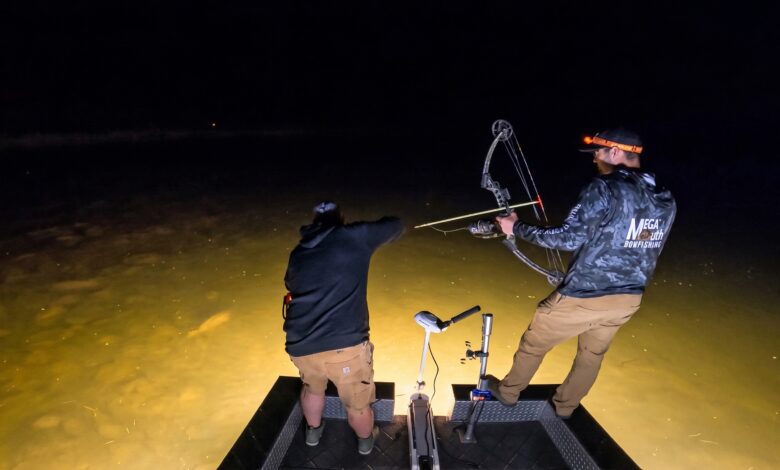
Bowfishing is a highly visual pursuit that merges the mechanical discipline of archery with the fluid dynamics of angling. While heavily associated with the sweltering nights of mid-summer, a seasoned bowfisher knows that late November is actually prime time in the southern United States and other mild climates.
As late autumn sets in, the oppressive heat and heavy insect activity of summer finally break. More importantly, water clarity often peaks as warm-weather algae blooms die off, offering exceptional visibility. Fish remain highly active in these temperate zones, making late fall one of the most comfortable and productive times to be on the water. Executing a successful late-season trip requires an understanding of specialized gear, meticulous target identification, and strict safety protocols.
Identify Your Targets and Verify Local Regulations
Bowfishing typically focuses on various species of carp and gar, but these fish have entirely different ecological profiles. “Carp” encompasses multiple species, some of which are highly invasive, while many gar species are native to their respective regions. The ecological effects and legal status of these fish vary significantly by species and location.
In fishing regulations, these species are sometimes grouped into categories like “rough fish” or “non-game fish.” You should recognize that these are strictly regulatory classifications that vary by jurisdiction. Even in states with year-round open water, specific zones or waterways may have seasonal closures or shifting regulations that take effect in the late fall. Always positively identify your target species and verify the current local rules before taking a shot to ensure your harvest is legal.
Assemble Compatible Gear
A bow used for bowfishing needs appropriate, compatible accessories; standard hunting arrows will shatter or deflect on impact with the water, and standard archery setups can be dangerous without proper line management.
-
The Bow Setup: Set your bow to a draw weight and configuration that is compatible with the shooter, the target, your specific equipment, and applicable rules. Because mild November weather means you aren’t fighting bulky winter jackets, you can shoot your standard setup comfortably. Most bowfishers prefer a highly manageable draw weight (often 30 to 45 pounds) simply because you may take dozens of rapid shots in a single night without the luxury of a let-off.
-
Bowfishing Reels: You will need a specialized reel, such as a bottle-style retriever or a heavy-duty spincast reel mounted to your bow. Proper line-routing is vital for both safety and performance. Always verify that your line is clear of the bowstring, cables, and your hands before the draw, and strictly follow the reel and bow manufacturers’ specific safety instructions.
-
Arrows and Optics: Use a solid fiberglass or carbon-composite arrow specifically designed for the dense impact of water and fully compatible with your setup. The point must feature heavy-duty barbs to hold the fish during retrieval. If you are shooting during the day, remember that the late November sun sits at a lower angle in the sky, creating severe surface glare. High-quality polarized sunglasses with amber or copper lenses are mandatory gear for cutting the glare and spotting cruising fish.
Calculate Light Refraction
Shooting into water requires fundamentally adjusting your aim to account for light refraction. Refraction bends the light as it exits the water, creating an optical illusion that makes a submerged fish appear shallower and further back than it actually is.
The standard advice to “aim low” is only a starting point. The exact adjustment depends heavily on your viewing angle and your distance from the target. If you are standing on the deck directly over a fish at a steep, downward angle, you need minimal compensation. However, if you are targeting a fish at a shallow angle ten yards out, you must aim significantly lower than the visual target. Water rapidly kills an arrow’s momentum and alters its trajectory; practice and experience are the only ways to build the instinctive muscle memory required to make these split-second geometric adjustments.
Prioritize Water and Boat Safety
Even in mild climates where freezing isn’t an immediate threat, water safety must dictate every action you take.
-
Line Management: Never wrap the retrieving line around your hand, wrist, or any part of your body. A large fish or an arrow lodged in a submerged log can quickly pull the line tight, leading to severe injury.
-
Shooting Safety: Positively identify your target and verify that you have a safe, clear background before drawing. Ensure you can safely recover your arrow after every shot, and never shoot blindly into murky or disturbed water.
-
Stability on the Deck: Bowfishing usually takes place from the elevated, flat deck of a boat. Even on a warm November night, evening dew will settle heavily on the boat, turning smooth surfaces incredibly slick. Always shoot from a stable, flat-footed position, ensure your footing is completely secure before drawing, and wear a properly fitted life jacket whenever you are on the water.
To learn more about the equipment and see the tactics in practice, check out AMS Bowfishing on CarbonTV.